
If you spend any time in the energy world, you’ve probably noticed something. The conversation isn’t just about generating clean power anymore – it’s about storing it. Managing it. Delivering it when people actually need it.
The grid is undergoing the most complex transition in its history. Renewables are scaling faster than anyone predicted. Electrification is reshaping transportation, manufacturing, coordination, and the built environment. And behind the scenes, utilities, developers, and operators are wrestling with a basic but fundamental question. How do we keep everything running reliably?
That’s where modern battery energy storage systems (BESS) come in. It’s no longer a “nice-to-have,” but rather a critical layer of infrastructure. Yet not all BESS are created equal, and the industry is learning that quickly.
The Rise of “Smart” BESS
Over the last several years, the market has shifted from simply buying boxes full of batteries to demanding systems that think.
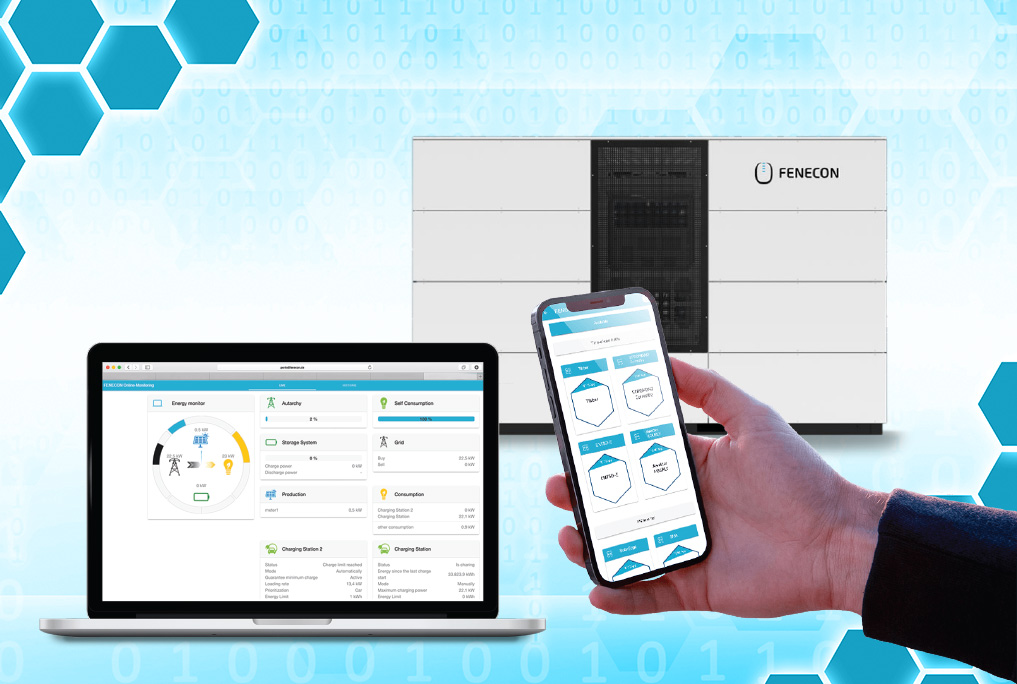
Smart BESS isn’t just a container with cells. It’s a coordinated system comprised of battery modules, BMS, PCS, control architectures, safety layers, thermal management, and data intelligence – all working together to optimize performance in real time.
This is where companies like FENECON are focusing their innovation.
Smart BESS should:
- Know how to protect itself before issues occur
- Balance and optimize energy flows without operator intervention
- Predict behavior under different grid or load conditions
- Maximize useful life, not just nameplate capacity
- Integrate cleanly with the broader energy ecosystem
It’s not hype. It’s what utilities, EPCs, C&I operators, and mobility partners are now demanding because reliability isn’t theoretical – it’s the difference between a successful project and one that fails on day one.
Why Reliability Still Matters More Than Anything
In the energy storage industry, reliability isn’t a marketing word. It’s math. It’s uptime. It’s how a customer evaluates both risk and ROI.
BESS is only as good as its ability to deliver power when everything else doesn’t go according to plan. At FENECON, we see reliability as an ecosystem decision, not a component-level one.
It comes from:
- Smart control architecture
- Predictive safety and monitoring
- Thoughtful thermal and modular design
- Tight integration between hardware and software
- Choosing the right modules for the right application
- Engineering for real use cases, not theoretical ones
Energy operators aren’t looking for futuristic promises – they want systems that behave consistently today, tomorrow, and 15 years from now.
What’s Next for the Industry
The energy landscape is moving fast, but some themes are becoming clear.
- Distributed storage is scaling in ways that mirror distributed generation a decade ago.
- Grid reliability concerns are pushing utilities toward flexible, controllable storage assets.
- Fleet electrification and new mobility applications are forcing the market to think beyond traditional stationary deployments.
- Circular energy concepts, such as first-life EV modules, are becoming not just sustainable but economical.
- And most importantly, software-defined energy systems are emerging as the differentiator between “storage” and “smart storage.”
Whether it’s a microgrid shifting peak load at a datacenter, an airport electrification project, or a utility planning multi-gigawatt deployments, the direction is the same; energy storage must be intelligent, adaptable, and trustworthy.
Where FENECON Fits In
FENECON’s mission isn’t to build the most battery energy storage systems – it’s to build energy systems that operate smarter and last longer. From our work in Europe to our expansion in the U.S., we’ve seen firsthand what customers actually value. They value systems that work. Systems that think. And systems that can evolve alongside the grid.
The future of energy is more complex than it used to be. But with the right tools and the right architecture, it becomes more resilient too.